Pearland Multi-Vehicle Accident Lawyer
Injured in a Multi-Vehicle Accident in Pearland?
A crash involving several vehicles can be much more complicated than a two-car accident.
In a multi-vehicle collision, one driver's actions may trigger a chain reaction involving several other vehicles. A driver who initially appears to be involved only in the middle of a crash may have been pushed into another vehicle, while a later impact may create additional injuries and property damage.
Determining who is legally responsible can require reconstructing the sequence of impacts and identifying how each driver's actions contributed to the collision.
If you were injured in a multi-vehicle accident in Pearland, the Law Office of James Zier, P.C. can investigate what happened and pursue compensation from responsible parties and insurance companies.

Founder and Managing Attorney James Zier has more than 25 years of experience and will advocate for you every step of the way, so you can focus on your recovery.
Call (281) 485-3377 for a free consultation.
Pearland Multi-Vehicle Accident Lawyer
Injured in a Multi-Vehicle Accident in Pearland?
A crash involving several vehicles can be much more complicated than a two-car accident.
In a multi-vehicle collision, one driver's actions may trigger a chain reaction involving several other vehicles. A driver who initially appears to be involved only in the middle of a crash may have been pushed into another vehicle, while a later impact may create additional injuries and property damage.
Determining who is legally responsible can require reconstructing the sequence of impacts and identifying how each driver's actions contributed to the collision.
If you were injured in a multi-vehicle accident in Pearland, the Law Office of James Zier, P.C. can investigate what happened and pursue compensation from responsible parties and insurance companies.
Founder and Managing Attorney James Zier has more than 25 years of experience and will advocate for you every step of the way, so you can focus on your recovery.
Call (281) 485-3377 for a free consultation.
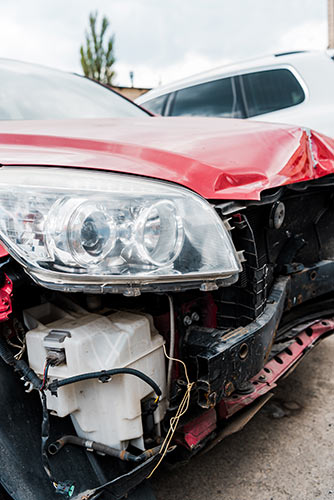
What Is a Multi-Vehicle Accident?
A multi-vehicle accident involves three or more vehicles in a related collision or sequence of collisions.
These crashes can occur when:
- One vehicle rear-ends another and pushes it into a third vehicle
- A driver loses control and strikes several vehicles
- A vehicle crosses into opposing traffic and causes additional collisions
- A crash blocks traffic and causes following vehicles to collide
- Several vehicles collide during sudden braking
- A commercial vehicle triggers a chain reaction
- A vehicle spins or rolls into the path of other traffic
- A driver makes an unsafe maneuver that causes several other drivers to react
Some multi-vehicle accidents happen almost simultaneously. Others develop over several seconds as additional vehicles become involved.
That distinction can matter when determining which driver caused each impact.
What Is a Chain-Reaction Accident?
A chain-reaction accident occurs when one collision triggers additional impacts involving other vehicles.
For example:
- Driver A fails to stop and strikes Driver B.
- Driver B's vehicle is pushed forward.
- Driver B then strikes Driver C.
- Driver C swerves and collides with Driver D.
Although the crashes occurred in sequence, that does not necessarily mean every driver bears equal responsibility.
The investigation must determine what caused the initial collision and whether later impacts were a foreseeable consequence of the original event or involved independent contributing conduct.
What Is a Chain-Reaction Accident?
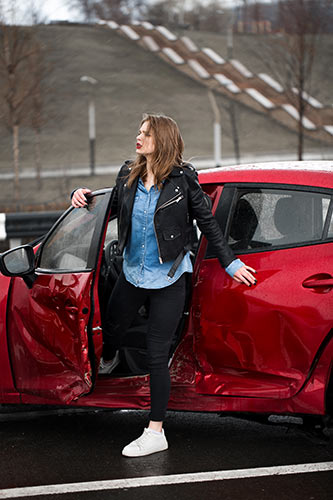
A chain-reaction accident occurs when one collision triggers additional impacts involving other vehicles.
For example:
- Driver A fails to stop and strikes Driver B.
- Driver B's vehicle is pushed forward.
- Driver B then strikes Driver C.
- Driver C swerves and collides with Driver D.
Although the crashes occurred in sequence, that does not necessarily mean every driver bears equal responsibility.
The investigation must determine what caused the initial collision and whether later impacts were a foreseeable consequence of the original event or involved independent contributing conduct.
Common Causes of Multi-Vehicle Accidents
A driver following too closely may be unable to stop when traffic slows or another collision occurs ahead.
When several vehicles are traveling closely together, one initial impact can quickly become a chain reaction.
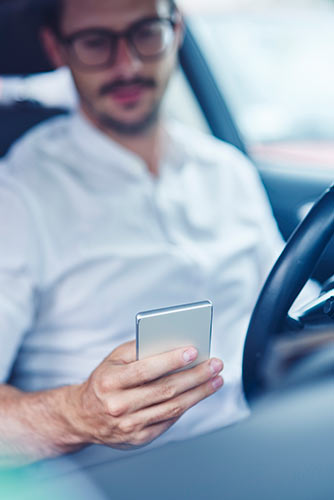
A distracted driver may fail to notice slowing traffic, stopped vehicles, or an accident developing ahead.
Potential distractions include:
- Texting
- Phone use
- Navigation systems
- Eating
- Adjusting vehicle controls
- Looking at passengers
- Other activities unrelated to driving
A speeding driver has less time and distance to respond when traffic changes.
Speed can also increase the severity of the initial impact and the likelihood that other vehicles will become involved.
Alcohol or drug impairment affects perception, reaction time, judgment, and vehicle control.
An impaired driver may fail to recognize stopped traffic or react appropriately to a developing collision.
A driver moving abruptly into another lane can force nearby vehicles to brake or swerve.
Those evasive actions can sometimes lead to additional collisions even when the original vehicle does not make physical contact with every vehicle involved.
A tire failure, brake problem, steering defect, or other mechanical issue can cause a vehicle to lose control and collide with multiple vehicles.
When a mechanical problem is suspected, the vehicle may need to be preserved and inspected before repairs or disposal.
Where Multi-Vehicle Accidents Happen in Pearland
Multi-vehicle collisions can happen anywhere, including:
- Highways – 288, 610, Beltway 8, Highway 6
- Freeways
- Major arterial roads
- Intersections – 288 feeder and Broadway, 288 feeder and Shadow Creek Parkway/McHard Road
- Entrance and exit ramps
- Two-lane roads
- Construction zones
- Congested traffic
- Parking areas – Walmart, Target, HEB, Pearland Town Center
- Residential streets
High speed roads can produce particularly serious chain-reaction crashes because vehicles may have less time to respond when traffic suddenly slows or stops.
The location of the collision can also determine what evidence may be available, including traffic camera footage, roadway surveillance, and electronic toll or vehicle information.
Where Multi-Vehicle Accidents Happen in Pearland
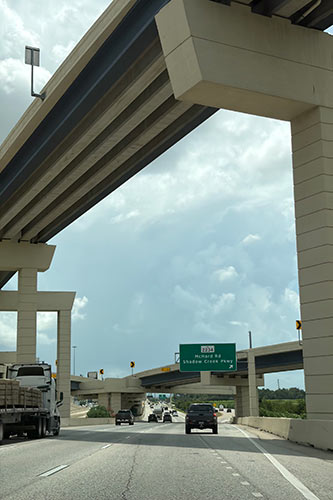
Multi-vehicle collisions can happen anywhere, including:
- Highways – 288, 610, Beltway 8, Highway 6
- Freeways
- Major arterial roads
- Intersections – 288 feeder and Broadway, 288 feeder and Shadow Creek Parkway/McHard Road
- Entrance and exit ramps
- Two-lane roads
- Construction zones
- Congested traffic
- Parking areas – Walmart, Target, HEB, Pearland Town Center
- Residential streets
High speed roads can produce particularly serious chain-reaction crashes because vehicles may have less time to respond when traffic suddenly slows or stops.
The location of the collision can also determine what evidence may be available, including traffic camera footage, roadway surveillance, and electronic toll or vehicle information.
How Do You Determine Who Caused a Multi-Vehicle Accident?
Determining responsibility in a multi-vehicle collision requires more than identifying the vehicle that made the first contact.
An investigation may need to answer:
- Which vehicle initiated the collision?
- Why did that vehicle collide with another vehicle?
- Which vehicles were stopped or moving?
- What were the vehicles' speeds?
- How much time did each driver have to react?
- Did any driver have an opportunity to avoid the collision?
- Did a later driver create a separate collision?
- Did an earlier impact push another vehicle into a subsequent impact?
- Did a mechanical problem contribute?
- Did road conditions contribute?
- Were multiple drivers negligent?
The answers can affect which parties may be responsible for particular injuries and losses.
Why the Sequence of Impacts Matters
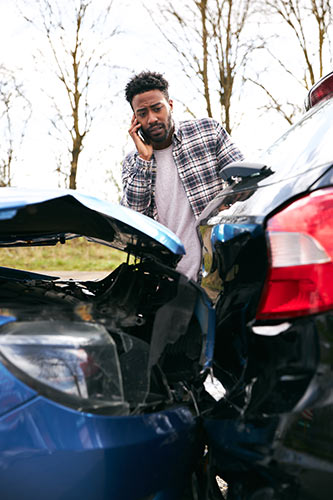
A multi-vehicle crash may involve several separate impacts.
For example, an occupant could experience:
- An initial rear impact
- A second impact with another vehicle
- A collision with the vehicle's interior
- A third impact after the vehicle is pushed into another lane
The investigation should attempt to determine when and how each impact occurred.
This can be important because the location of vehicle damage does not necessarily tell the entire story.
Why the Sequence of Impacts Matters
A multi-vehicle crash may involve several separate impacts.
For example, an occupant could experience:
- An initial rear impact
- A second impact with another vehicle
- A collision with the vehicle's interior
- A third impact after the vehicle is pushed into another lane
The investigation should attempt to determine when and how each impact occurred.
This can be important because the location of vehicle damage does not necessarily tell the entire story.
How Vehicle Damage Can Help Reconstruct a Multi-Vehicle Crash
Each vehicle may contain evidence about the collision.
Investigators may examine:
- Front-end damage
- Rear-end damage
- Side damage
- Undercarriage damage
- Crush patterns
- Paint transfer
- Broken vehicle components
- Airbag deployment
- Seatbelt use
- Vehicle resting position
Comparing damage across several vehicles can help establish the sequence and direction of impacts.
How Vehicle Damage Can Help Reconstruct a Multi-Vehicle Crash
Each vehicle may contain evidence about the collision.
Investigators may examine:
- Front-end damage
- Rear-end damage
- Side damage
- Undercarriage damage
- Crush patterns
- Paint transfer
- Broken vehicle components
- Airbag deployment
- Seatbelt use
- Vehicle resting position
Comparing damage across several vehicles can help establish the sequence and direction of impacts.
Accident Reconstruction in a Multi-Vehicle Collision
A serious multi-vehicle accident may require accident reconstruction.
A reconstruction investigation can consider:
- Vehicle damage
- Vehicle weights
- Vehicle positions
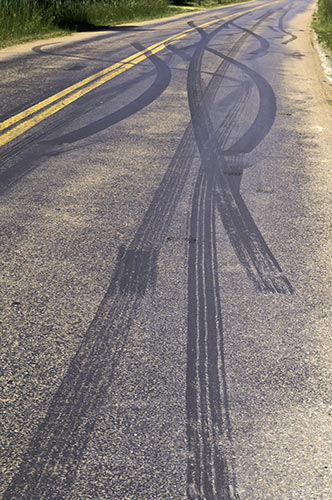
- Tire marks
- Debris
- Skid marks
- Roadway geometry
- Traffic conditions
- Vehicle speeds
- Video footage
- Witness statements
- Electronic vehicle data
The objective is to develop an evidence based explanation of how the collision occurred.
Accident Reconstruction in a Multi-Vehicle Collision
A serious multi-vehicle accident may require accident reconstruction.
A reconstruction investigation can consider:
- Vehicle damage
- Vehicle weights
- Vehicle positions
- Tire marks
- Debris
- Skid marks
- Roadway geometry
- Traffic conditions
- Vehicle speeds
- Video footage
- Witness statements
- Electronic vehicle data
The objective is to develop an evidence based explanation of how the collision occurred.
Conflicting accounts are common after a multi-vehicle crash.
One driver may remember being stopped. Another may say traffic was moving. A third may believe the first collision occurred somewhere else.
Because several people may have witnessed different portions of the accident, statements should be compared with objective evidence.
Useful evidence may include:
- Dashcam footage
- Surveillance video
- Photographs
- Vehicle damage
- Police observations
- Independent witnesses
- Electronic vehicle information
- Skid marks
- Debris patterns
No single driver's account necessarily establishes what happened.
This is an important distinction in a chain-reaction crash.
Suppose your vehicle is stopped in traffic and another driver strikes you from behind, pushing your vehicle into the car ahead.
The fact that your vehicle struck the vehicle in front of you does not necessarily mean you caused that collision.
The investigation should examine the sequence of impacts and whether the initial rear impact caused your vehicle to move forward.
This is one reason preserving photographs and documenting vehicle damage can be particularly important in multi-vehicle accidents.
A driver may make contact with another vehicle only because an earlier collision forced or pushed the vehicle forward.
In that situation, the physical evidence should be examined to determine the sequence of events.
Relevant evidence may include:
- Rear damage
- Front damage
- Vehicle positions
- Damage severity
- Witness accounts
- Video
- Tire marks
- Statements from the drivers
The vehicle that made the final contact is not necessarily the vehicle responsible for starting the chain reaction.
A driver may brake, swerve, or change lanes to avoid an imminent collision.
That maneuver can sometimes result in contact with another vehicle.
The circumstances should be examined carefully, including:
- What hazard the driver was responding to
- How much time the driver had to react
- Whether the hazard was created by another driver
- The available roadway
- Traffic conditions
- The driver's speed
- Whether another reasonable evasive action was available
The fact that a driver changed direction before impact does not by itself establish liability.
A disabled or stopped vehicle can become part of a multi-vehicle collision.
The investigation may consider:
- Why the vehicle was stopped
- Whether warning lights were activated
- Whether the vehicle was visible
- Roadway lighting
- Traffic conditions
- Whether the vehicle was properly positioned
- How approaching drivers responded
If another driver caused the initial collision with the stopped vehicle, additional questions may arise concerning the subsequent impacts.
Conflicting accounts are common after a multi-vehicle crash.
One driver may remember being stopped. Another may say traffic was moving. A third may believe the first collision occurred somewhere else.
Because several people may have witnessed different portions of the accident, statements should be compared with objective evidence.
Useful evidence may include:
- Dashcam footage
- Surveillance video
- Photographs
- Vehicle damage
- Police observations
- Independent witnesses
- Electronic vehicle information
- Skid marks
- Debris patterns
No single driver's account necessarily establishes what happened.
This is an important distinction in a chain-reaction crash.
Suppose your vehicle is stopped in traffic and another driver strikes you from behind, pushing your vehicle into the car ahead.
The fact that your vehicle struck the vehicle in front of you does not necessarily mean you caused that collision.
The investigation should examine the sequence of impacts and whether the initial rear impact caused your vehicle to move forward.
This is one reason preserving photographs and documenting vehicle damage can be particularly important in multi-vehicle accidents.
A driver may make contact with another vehicle only because an earlier collision forced or pushed the vehicle forward.
In that situation, the physical evidence should be examined to determine the sequence of events.
Relevant evidence may include:
- Rear damage
- Front damage
- Vehicle positions
- Damage severity
- Witness accounts
- Video
- Tire marks
- Statements from the drivers
The vehicle that made the final contact is not necessarily the vehicle responsible for starting the chain reaction.
A driver may brake, swerve, or change lanes to avoid an imminent collision.
That maneuver can sometimes result in contact with another vehicle.
The circumstances should be examined carefully, including:
- What hazard the driver was responding to
- How much time the driver had to react
- Whether the hazard was created by another driver
- The available roadway
- Traffic conditions
- The driver's speed
- Whether another reasonable evasive action was available
The fact that a driver changed direction before impact does not by itself establish liability.
A disabled or stopped vehicle can become part of a multi-vehicle collision.
The investigation may consider:
- Why the vehicle was stopped
- Whether warning lights were activated
- Whether the vehicle was visible
- Roadway lighting
- Traffic conditions
- Whether the vehicle was properly positioned
- How approaching drivers responded
If another driver caused the initial collision with the stopped vehicle, additional questions may arise concerning the subsequent impacts.
When a commercial truck is involved, the investigation may involve additional parties and evidence.
Potential issues include:
- Driver conduct
- Employer responsibility
- Driver qualification
- Vehicle maintenance
- Cargo loading
- Hours-of-service compliance
- Electronic data
- Commercial insurance
- Company policies
The Law Office of James Zier, P.C. also handles commercial truck accident claims involving delivery trucks, utility vehicles, construction trucks, box trucks, and other commercial vehicles.
A truck's size and weight can also cause substantial damage to multiple vehicles during a chain-reaction collision.
A rideshare vehicle can introduce additional insurance questions.
The applicable insurance coverage may depend on what the driver was doing at the time of the accident, including whether the driver was:
- Not logged into the rideshare application
- Waiting for a ride request
- Traveling to pick up a passenger
- Carrying a passenger
The available coverage depends on the circumstances and applicable policies.
Several vehicles may be involved in a crash even though one or more drivers lack liability insurance.
If a driver who contributed to your injuries was uninsured, your own uninsured motorist coverage may potentially provide another source of recovery.
Whether coverage applies depends on the policy and circumstances.
A multi-vehicle crash can result in substantial damages, particularly when several people are seriously injured.
The available liability insurance may not be sufficient to cover every injured person's losses.
If an at-fault driver's liability limits are insufficient, applicable underinsured motorist coverage may potentially provide additional protection.
The availability and amount of coverage depend on the applicable policies and circumstances.
When a commercial truck is involved, the investigation may involve additional parties and evidence.
Potential issues include:
- Driver conduct
- Employer responsibility
- Driver qualification
- Vehicle maintenance
- Cargo loading
- Hours-of-service compliance
- Electronic data
- Commercial insurance
- Company policies
The Law Office of James Zier, P.C. also handles commercial truck accident claims involving delivery trucks, utility vehicles, construction trucks, box trucks, and other commercial vehicles.
A truck's size and weight can also cause substantial damage to multiple vehicles during a chain-reaction collision.
A rideshare vehicle can introduce additional insurance questions.
The applicable insurance coverage may depend on what the driver was doing at the time of the accident, including whether the driver was:
- Not logged into the rideshare application
- Waiting for a ride request
- Traveling to pick up a passenger
- Carrying a passenger
The available coverage depends on the circumstances and applicable policies.
Several vehicles may be involved in a crash even though one or more drivers lack liability insurance.
If a driver who contributed to your injuries was uninsured, your own uninsured motorist coverage may potentially provide another source of recovery.
Whether coverage applies depends on the policy and circumstances.
A multi-vehicle crash can result in substantial damages, particularly when several people are seriously injured.
The available liability insurance may not be sufficient to cover every injured person's losses.
If an at-fault driver's liability limits are insufficient, applicable underinsured motorist coverage may potentially provide additional protection.
The availability and amount of coverage depend on the applicable policies and circumstances.
Yes, depending on the facts.
For example, several drivers may have contributed to a chain reaction through different acts or omissions.
One driver may have caused the initial collision, while another driver's separate conduct may have contributed to a later impact.
The evidence must be evaluated to determine each person's potential responsibility.
A multi-vehicle accident can involve more than one potentially responsible person or entity.
Potential parties may include:
- One or more drivers
- Vehicle owners
- Employers
- Commercial vehicle operators
- Rideshare companies or applicable insurers
- Vehicle or parts manufacturers in appropriate cases
- Maintenance providers in appropriate cases
- Other parties whose conduct contributed to the collision
Not every case will involve all of these parties.
A thorough investigation helps determine which parties and insurance policies may actually be relevant.
Yes, depending on the facts.
For example, several drivers may have contributed to a chain reaction through different acts or omissions.
One driver may have caused the initial collision, while another driver's separate conduct may have contributed to a later impact.
The evidence must be evaluated to determine each person's potential responsibility.
A multi-vehicle accident can involve more than one potentially responsible person or entity.
Potential parties may include:
- One or more drivers
- Vehicle owners
- Employers
- Commercial vehicle operators
- Rideshare companies or applicable insurers
- Vehicle or parts manufacturers in appropriate cases
- Maintenance providers in appropriate cases
- Other parties whose conduct contributed to the collision
Not every case will involve all of these parties.
A thorough investigation helps determine which parties and insurance policies may actually be relevant.
Multiple Insurance Companies After a Multi-Vehicle Accident
One of the biggest differences between a two-car accident and a multi-vehicle collision is the number of insurance companies that may become involved.
There may be separate insurers for:
- Each driver
- Commercial vehicles
- Employers
- Rideshare coverage
- Uninsured or underinsured motorist coverage
- Other potentially responsible parties
Each insurer may conduct its own investigation and may take a different position concerning liability.
A coordinated investigation can help prevent important evidence or potential sources of recovery from being overlooked.
Multiple Insurance Companies After a Multi-Vehicle Accident
One of the biggest differences between a two-car accident and a multi-vehicle collision is the number of insurance companies that may become involved.
There may be separate insurers for:
- Each driver
- Commercial vehicles
- Employers
- Rideshare coverage
- Uninsured or underinsured motorist coverage
- Other potentially responsible parties
Each insurer may conduct its own investigation and may take a different position concerning liability.
A coordinated investigation can help prevent important evidence or potential sources of recovery from being overlooked.
This can happen when several insurers are involved.
One insurer may argue that another driver's policyholder caused the crash. Another insurer may dispute that position.
Those disputes do not necessarily resolve the injured person's claim.
The underlying evidence should be evaluated independently, including the sequence of impacts, driver conduct, vehicle damage, and applicable insurance coverage.
Preserving evidence is especially important when several vehicles are involved.
If possible, preserve:
- Photographs of every involved vehicle
- Photographs of the accident scene
- Dashcam footage
- Surveillance information
- Witness contact information
- Police reports
- Medical records
- Medical bills
- Vehicle repair estimates
- Insurance correspondence
- Employment and lost wage records
If your vehicle has significant damage, do not assume that repairs or disposal can occur without preserving evidence first.
When a mechanical defect or vehicle malfunction may have contributed to the accident, preservation can be even more important.
Photographs can document evidence that may later change or disappear.
Take photographs, when safe, of:
- All sides of your vehicle
- Other vehicles involved
- Damage locations
- Debris
- Skid marks
- Roadway conditions
- Traffic controls
- Vehicle positions
- Visible injuries
Photographs taken shortly after the collision may help investigators understand the scene before vehicles are moved or repaired.
Video can show the sequence of events more clearly than memory alone.
Potential sources include:
- Dashcams
- Traffic cameras
- Nearby businesses
- Parking lots
- Residential security cameras
- Vehicle cameras
Surveillance footage may be automatically deleted or overwritten. If you know of a camera that may have captured the collision, identify it promptly and inform your attorney.
This can happen when several insurers are involved.
One insurer may argue that another driver's policyholder caused the crash. Another insurer may dispute that position.
Those disputes do not necessarily resolve the injured person's claim.
The underlying evidence should be evaluated independently, including the sequence of impacts, driver conduct, vehicle damage, and applicable insurance coverage.
Preserving evidence is especially important when several vehicles are involved.
If possible, preserve:
- Photographs of every involved vehicle
- Photographs of the accident scene
- Dashcam footage
- Surveillance information
- Witness contact information
- Police reports
- Medical records
- Medical bills
- Vehicle repair estimates
- Insurance correspondence
- Employment and lost wage records
If your vehicle has significant damage, do not assume that repairs or disposal can occur without preserving evidence first.
When a mechanical defect or vehicle malfunction may have contributed to the accident, preservation can be even more important.
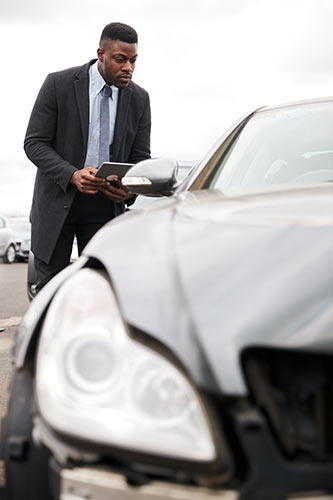
Photographs can document evidence that may later change or disappear.
Take photographs, when safe, of:
- All sides of your vehicle
- Other vehicles involved
- Damage locations
- Debris
- Skid marks
- Roadway conditions
- Traffic controls
- Vehicle positions
- Visible injuries
Photographs taken shortly after the collision may help investigators understand the scene before vehicles are moved or repaired.
Video can show the sequence of events more clearly than memory alone.
Potential sources include:
- Dashcams
- Traffic cameras
- Nearby businesses
- Parking lots
- Residential security cameras
- Vehicle cameras
Surveillance footage may be automatically deleted or overwritten. If you know of a camera that may have captured the collision, identify it promptly and inform your attorney.
What Should I Do Immediately After a Multi-Vehicle Accident?
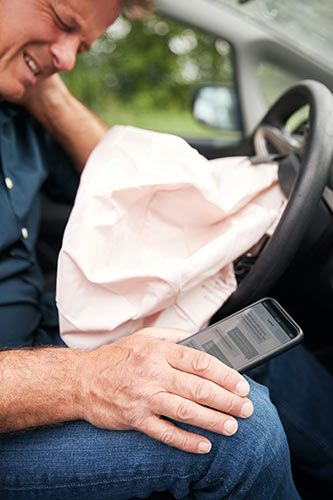
Some collision related injuries may not be immediately apparent.
Obtain appropriate medical evaluation and follow your healthcare provider's recommendations.
What Should I Do Immediately After a Multi-Vehicle Accident?
Some collision related injuries may not be immediately apparent.
Obtain appropriate medical evaluation and follow your healthcare provider's recommendations.
Common Injuries From
Multi-Vehicle Accidents
Multi-vehicle collisions can produce a wide range of injuries.
Potential injuries include:
- Traumatic brain injuries
- Concussions
- Neck injuries
- Back injuries
- Spinal cord injuries
- Broken bones
- Shoulder injuries
- Chest injuries
- Internal injuries
- Abdominal injuries
- Knee and leg injuries
- Arm and hand injuries
- Nerve damage
- Soft-tissue injuries
- Burns
- Permanent disabilities
The severity of an injury can depend on the number and direction of impacts, vehicle speeds, occupant position, seatbelt use, airbags, and other circumstances.
Common Injuries From Multi-Vehicle Accidents
Multi-vehicle collisions can produce a wide range of injuries.
Potential injuries include:
- Traumatic brain injuries
- Concussions
- Neck injuries
- Back injuries
- Spinal cord injuries
- Broken bones
- Shoulder injuries
- Chest injuries
- Internal injuries
- Abdominal injuries
- Knee and leg injuries
- Arm and hand injuries
- Nerve damage
- Soft-tissue injuries
- Burns
- Permanent disabilities
The severity of an injury can depend on the number and direction of impacts, vehicle speeds, occupant position, seatbelt use, airbags, and other circumstances.
Multiple Impacts Can Increase Injury Risk
An occupant can experience forces from more than one direction during a chain-reaction collision.
For example, a vehicle may be struck from behind and then pushed into another vehicle.
That can subject occupants to multiple sudden changes in movement.
Medical evaluation can therefore be important even when the initial impact does not appear severe.

Multiple Impacts Can Increase Injury Risk
An occupant can experience forces from more than one direction during a chain-reaction collision.
For example, a vehicle may be struck from behind and then pushed into another vehicle.
That can subject occupants to multiple sudden changes in movement.
Medical evaluation can therefore be important even when the initial impact does not appear severe.
Depending on the circumstances and applicable law, an injury claim may involve damages for:
- Emergency medical care
- Hospitalization
- Surgery
- Rehabilitation
- Physical therapy
- Prescription medications
- Future medical care
- Lost wages
- Reduced earning capacity
- Physical pain
- Mental anguish
- Physical impairment
- Disfigurement
- Loss of enjoyment of life
- Property damage
The potential value of an individual claim depends on the injuries, losses, liability, evidence, available insurance coverage, and other circumstances.
A multi-vehicle collision does not necessarily mean every involved driver was equally responsible.
Texas proportionate responsibility law requires responsibility to be evaluated based on the conduct that caused or contributed to the harm. If your own conduct is alleged to have contributed to the accident, the specific evidence should be examined before accepting an insurer's percentage-of-fault determination.
A driver's statement is only one piece of evidence.
The investigation should examine:
- Police reports and statements from all witnesses
- Vehicle damage and the location of the impact
- Traffic signals, signs, and roadway conditions
- Photos, videos, and surveillance footage
- Skid marks, debris, and other physical evidence
- Cellphone and other electronic records
Take photographs, when safe, of:
- All sides of your vehicle
- Other vehicles involved
- Damage locations
- Debris
- Skid marks
- Roadway conditions
- Traffic controls
- Vehicle positions
- Visible injuries
Photographs taken shortly after the collision may help investigators understand the scene before vehicles are moved or repaired.
Depending on the circumstances and applicable law, an injury claim may involve damages for:
- Emergency medical care
- Hospitalization
- Surgery
- Rehabilitation
- Physical therapy
- Prescription medications
- Future medical care
- Lost wages
- Reduced earning capacity
- Physical pain
- Mental anguish
- Physical impairment
- Disfigurement
- Loss of enjoyment of life
- Property damage
The potential value of an individual claim depends on the injuries, losses, liability, evidence, available insurance coverage, and other circumstances.
A multi-vehicle collision does not necessarily mean every involved driver was equally responsible.
Texas proportionate responsibility law requires responsibility to be evaluated based on the conduct that caused or contributed to the harm. If your own conduct is alleged to have contributed to the accident, the specific evidence should be examined before accepting an insurer's percentage-of-fault determination.
A driver's statement is only one piece of evidence.
The investigation should examine:
- Police reports and statements from all witnesses
- Vehicle damage and the location of the impact
- Traffic signals, signs, and roadway conditions
- Photos, videos, and surveillance footage
- Skid marks, debris, and other physical evidence
- Cellphone and other electronic records
Take photographs, when safe, of:
- All sides of your vehicle
- Other vehicles involved
- Damage locations
- Debris
- Skid marks
- Roadway conditions
- Traffic controls
- Vehicle positions
- Visible injuries
Photographs taken shortly after the collision may help investigators understand the scene before vehicles are moved or repaired.
Potential sources include:
- Dashcam footage from vehicles involved in the incident
- Traffic and intersection cameras
- Security cameras at nearby businesses or residences
- Doorbell cameras
- Surveillance footage from parking lots and garages
- Body-worn camera footage
- Video captured by witnesses or bystanders
In a multi-vehicle collision, determining which vehicle made the first impact and why can be particularly important.
A police report can be important evidence, but it does not necessarily resolve every issue in a civil injury claim.
If the report contains an inaccurate description of the collision, additional evidence may help establish what actually happened.
That evidence can include photographs, video, witnesses, vehicle damage, medical records, and accident reconstruction analysis.
Potential sources include:
- Dashcam footage from vehicles involved in the incident
- Traffic and intersection cameras
- Security cameras at nearby businesses or residences
- Doorbell cameras
- Surveillance footage from parking lots and garages
- Body-worn camera footage
- Video captured by witnesses or bystanders
In a multi-vehicle collision, determining which vehicle made the first impact and why can be particularly important.
A police report can be important evidence, but it does not necessarily resolve every issue in a civil injury claim.
If the report contains an inaccurate description of the collision, additional evidence may help establish what actually happened.
That evidence can include photographs, video, witnesses, vehicle damage, medical records, and accident reconstruction analysis.
How a Pearland Multi-Vehicle Accident Lawyer Can Help
The Law Office of James Zier, P.C. can investigate the circumstances of a multi-vehicle collision and pursue claims against all responsible parties and their insurance policies.
Depending on the circumstances, that may include:
- Reviewing the police report
- Reconstructing the sequence of impacts
- Identifying all involved drivers
- Identifying potentially responsible parties
- Preserving video evidence
- Interviewing witnesses
- Examining vehicle damage
- Investigating vehicle or mechanical issues
- Reviewing available electronic data
- Investigating insurance coverage
- Evaluating medical records
- Documenting financial losses
- Communicating with multiple insurance companies
- Negotiating a settlement
- Preparing the case for litigation and jury trial
Attorney James Zier brings more than 25 years of experience to every case. He and his team have extensive experience dealing with insurance companies and forcing them to pay full value for car accident claims.
How a Pearland Multi-Vehicle Accident Lawyer Can Help
The Law Office of James Zier, P.C. can investigate the circumstances of a multi-vehicle collision and pursue claims against all responsible parties and their insurance policies.
Depending on the circumstances, that may include:
- Reviewing the police report
- Reconstructing the sequence of impacts
- Identifying all involved drivers
- Identifying potentially responsible parties
- Preserving video evidence
- Interviewing witnesses
- Examining vehicle damage
- Investigating vehicle or mechanical issues
- Reviewing available electronic data
- Investigating insurance coverage
- Evaluating medical records
- Documenting financial losses
- Communicating with multiple insurance companies
- Negotiating a settlement
- Preparing the case for litigation and jury trial
Attorney James Zier brings more than 25 years of experience to every case. He and his team have extensive experience dealing with insurance companies and forcing them to pay full value for car accident claims.
How Long Do I Have to File a Multi-Vehicle Accident Claim in Texas?
It is critical to speak with an attorney as soon as possible to determine any deadlines in your case. Because a multi-vehicle accident can require investigation of several drivers, insurers, vehicles, and potential claims, determining the applicable deadlines can be especially complex in multi-vehicle accidents.
How Long Do I Have to File a Multi-Vehicle Accident Claim in Texas?
It is critical to speak with an attorney as soon as possible to determine any deadlines in your case. Because a multi-vehicle accident can require investigation of several drivers, insurers, vehicles, and potential claims, determining the applicable deadlines can be especially complex in multi-vehicle accidents.
Frequently Asked Questions About Multi-Vehicle Accidents
Uninsured motorist coverage may provide another source of recovery, depending on the policy and circumstances.
Underinsured motorist coverage may provide additional protection, depending on the policy and circumstances.
Talk to a Pearland Multi-Vehicle Accident Lawyer
A multi-vehicle collision can leave you dealing with serious injuries while several drivers and insurance companies dispute what happened.
The key questions may not be limited to who hit whom. A thorough investigation may need to determine how the collision began, how the impacts progressed, which drivers contributed to each event, and what insurance coverage is available.
The Law Office of James Zier, P.C. represents people injured in serious motor vehicle collisions in Pearland, Houston, and surrounding communities.
Attorney James Zier has more than 25 years of experience and fights for maximum compensation for every injured client. The firm offers free consultations and handles personal injury cases on a contingency fee basis, so you pay no attorney’s fee unless compensation is recovered.
Call (281) 485-3377 for a free consultation.
If you have been in a multi-vehicle accident, we can help.
Our team is available 24/7/365 at (281) 485-3377.
If you have been in a multi-vehicle accident, we can help. Our team is available 24/7/365 at (281) 485-3377.